
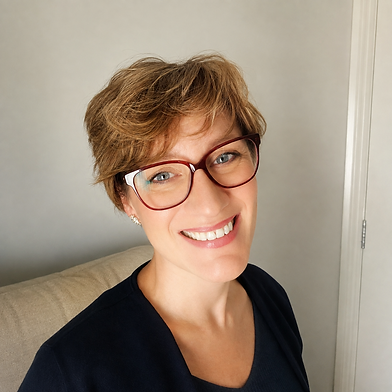
About Sam Spencer
I’m Sam, founder of INTAMiND. I’m a BABCP-accredited Cognitive Behavioural Psychotherapist, trained in EMDR, and a registered Social Worker with Social Work England.
I specialise in trauma recovery, emotional abuse, and relational difficulties, and bring over 15 years of experience in practice, including work within the NHS and secondary care settings.
I began my career as a volunteer befriender within a person-centred counselling setting, before qualifying as a social worker where I focused on mental health. I later trained as a CBT practitioner and completed further specialist training in EMDR.
My work is also shaped by lived experience, and below I share my personal story, including what led me to develop INTAMiND and how I work with the women I support today.
EARLY RELATIONAL PATTERNS
Growing up, I, like many, lived in a busy household where both parents worked and life was full. Back then, parenthood was often shaped by unconscious patterns and wider life stressors, which for me meant that emotional tone could feel difficult to predict.
This environment often left me feeling unsettled and, over time, it created panic. My stomach would flip, my thoughts would race, and I often felt disconnected from what was around me.
I didn’t understand what was happening; I only knew it felt frightening and out of my control. I became convinced something was wrong with me, but through a general lack of awareness around my symptoms, nobody could explain it, which only served to deepen my anxiety and sense of powerlessness.
Looking back, I can see my system was trying to cope in the best way it knew how, but it became stuck in a dynamic that felt too overwhelming.
Children tend to seek proximity to their caregivers, but if this relationship does not feel secure enough, they can grow up without a felt sense of internal stability, often needing to choose survival over self-alignment.
If we feel afraid, our bodies tend to fight, flee, or shut down, but when the source of fear feels ongoing or unavoidable, adapting through submission can become the most protective option available. For me, adapting to authority for survival was closely linked to self-blame, a response I now understand as part of how the nervous system tries to regulate and create certainty.
Over time, this pattern deepened the disconnection from myself and from others. The more I submitted, the less space I had to explore my inner world, and the less I knew myself, the more fearful I became of leaving the familiar family dynamic.
It’s a pattern I now recognise in many of the women I work with, and it sits at the heart of my therapeutic approach.

PATTERN DEVELOPMENT
Over time, self-abandonment led me to doubt myself and override my own instincts. I prioritised others’ needs ahead of my own and developed a sense of self that feared rejection, because to me, rejection meant discard and something I could not survive alone.
Gradually, I became less certain of what I truly thought or felt. I found it difficult to assert myself, and agreement often felt safer. Underneath this was a persistent fear of losing connection, which I later came to understand as a reliance on others to feel stable.
When that validation wasn’t available, it felt as though my internal world would collapse. To manage this, I began to over-function, giving more, doing more, trying to create stability from the outside in.
Eventually, this became exhausting. By the time I was a single parent of four, I felt both underequipped and overstretched. I had adapted well to giving, but receiving support often felt burdensome, which contributed to burnout. Without a strong internal compass to guide me, I found myself drawn into relationship dynamics that repeated earlier patterns.
I remember once hearing that women are naturally more discerning when choosing partners. At that point in my life, I had experienced several relationships that hadn’t worked, and I couldn’t reconcile that idea with my own experience.
In time, I came to understand it wasn’t that I couldn’t choose, but that my choices were being shaped by fear rather than self-trust.

THE TURNING POINT
Making and maintaining relationships with a reactive nervous system often felt frustrating and confusing. It would feel as though each new relationship might be the “right one,” only to find myself in a worse position.
Eventually, I became involved in a partnership that significantly impacted my self-worth, and I reached an all-time low.
This low point in my life didn’t bring comfort, although over time it did begin to bring clarity. It became apparent that something needed to change, which meant beginning to take responsibility for how I related to myself and others.
Learning to recondition myself was slow, and I often felt isolated in my experience. Feeling invisible in my recovery, I recognised a real need for genuine support.
At the time, much of the conversation centred around “red flags” and “signs of abuse” in others, with very little focus on the deeper process of recovery and reconnection. In many ways, that recognition shaped the type of support I now offer to others.

INTEGRATION & PRACTICE
After a period of trial and error, I came to understand that recovery relies on creating enough internal space to relate to experience with awareness, compassion, and choice.
Integration, for me, means bringing together psychological understanding with embodied change, which can often be supported through knowledge, perseverance, co-regulation, and practice.
I also came to see that much of my work was shaped by my own need for the kind of support that could hold both understanding and recognition, because when we begin the process of recovery, being truly seen can play an important role in healing.
Today, I work with women navigating the impact of relational trauma, supporting them to reconnect with themselves and develop a more stable internal sense of direction and grounding.
This work is deeply meaningful to me, and it continues to evolve through practice, reflection, and ongoing learning.
If any of this resonates with you and you would like to explore your own patterns in a safe, supportive space, you can book a free 20-minute call here or get in touch using the form below.